Choosing between a blog and a vlog is less about fashion and more about how you want to work for the next few years. Both can earn money in 2026. They demand different skills, budgets, and tolerance for platform risk. A blog is usually the steadier long-term asset. A vlog can grow faster and sell personality harder. Many serious creators eventually use both.
This guide compares blogging and vlogging for beginners and career-minded creators. You will see differences in cost, time, monetization, SEO, ownership, burnout risk, and a practical hybrid path that fits COMPROMATH readers who care about owning their audience.
What a blog is versus what a vlog is
A blog is primarily written content published on a website you control, often with images, guides, reviews, and newsletters attached. Readers arrive through search, social shares, email, and referrals. The post can keep earning attention for years if it stays useful.
A vlog is primarily video, usually hosted on YouTube, TikTok, Instagram, or similar platforms. Viewers discover you through recommendations and search inside those apps. Face, voice, pacing, and editing shape trust as much as the information itself.
That single format difference changes everything downstream. Writing favors depth, skimmable structure, and search intent. Video favors demonstration, personality, and algorithmic distribution.
Quick comparison for 2026
| Factor | Blogging | Vlogging |
|---|---|---|
| Main format | Written posts and pages | Video on social platforms |
| Startup cost | Low domain and hosting | Phone to full gear and editing time |
| Discovery | Search and owned channels | Platform algorithms and subscribers |
| Growth speed | Slower early, compounds later | Can spike fast, can stall fast |
| Ownership | High if you own the site and list | Lower on rented platforms |
| Burnout risk | Moderate if you overpublish | High if you chase daily relevance |
| Best early fit | Guides, SEO niches, written thinkers | Demos, personality brands, visual topics |
Profitability in 2026 without the hype
Vlogging often pays faster when a video finds an audience. Platform ads, brand integrations, and fan funding can move quickly because viewers feel they know you. Sponsorship rates for video frequently beat equivalent blog mentions because production looks more expensive and reach can scale in a weekend.
Blogging usually pays later and more quietly. Display ads got harder as AI summaries steal some informational clicks, yet blogs still monetize well through affiliates, digital products, consulting inbound, and email. A strong guide can earn for years with light updates. Margins on digital products are often excellent once the audience trusts you.
Neither path is “dead.” Generic AI text without experience struggles. Low-effort video without clear audio or a point also struggles. Distinct expertise wins in both formats. For broader online income context, see COMPROMATH’s roundup of ways of making money online.
Startup cost and time commitment
A blog can start for the price of a domain, or free on Blogger while you learn. Paid WordPress hosting keeps costs modest for beginners. Writing takes research and editing time, but you can publish from a laptop without lights or a timeline suite. COMPROMATH’s paths for a free blog, Blogger setup, and a budget WordPress blog cover the practical on-ramps.
A vlog can begin with a modern phone and a cheap lav microphone. Quality ceilings rise fast. Viewers notice bad audio before they notice a cheap camera. Editing, thumbnails, and consistent uploads consume evenings. Short-form clips can accelerate discovery, yet they also raise the pressure to stay visible every week.
SEO, traffic, and audience habits
Blogs still excel when someone wants a complete answer, a comparison, or a step-by-step they can scan and revisit. Search and AI systems both lean on clear written structure. That is why technical SEO settings, titles, and internal links matter so much on Blogger and WordPress. Start with habits from Google Blogger SEO and organic traffic guidelines if writing is your base.
Video wins when people want to see a product, a place, a face, or a process in motion. Viewers binge, comment, and trust recommendations quickly. The tradeoff is dependence on feed ranking. An older blog post can keep ranking while you sleep. An older video may keep earning, but channels that stop uploading often feel the quiet sooner.
Stability, ownership, and career practicality
From a long-career view, blogging is usually more practical if you value ownership. You control the domain, hosting, archives, and email list. If one social network changes overnight, your site and subscribers remain yours. That stability supports freelancing, product sales, and a brand that outlives any single algorithm mood.
Vlogging offers explosive upside on rented land. Policy shifts, demonetization, regional bans, or recommendation changes can cut reach without a meeting. Many creators also burn out from the filming and editing treadmill within a couple of years. High public visibility brings community and criticism together.
If you want a durable media business, treat video as a discovery engine and writing plus email as the owned core. That hybrid shows up again later in this article.
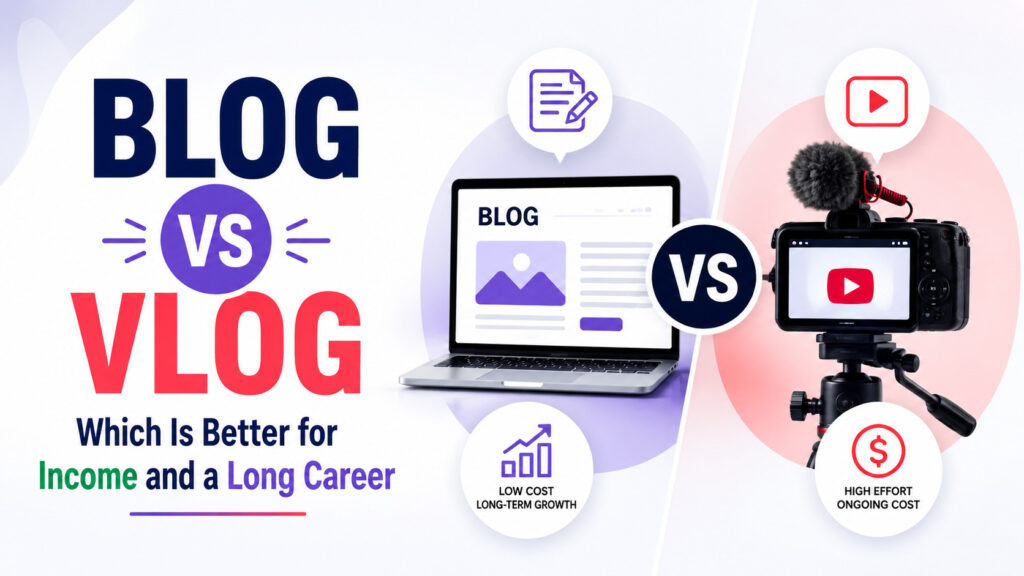
Pros and cons of blogging
What works in your favor. Low entry cost. Full control of the site and monetization stack. Ability to stay off camera. Easy hiring of writers once processes exist. Evergreen posts that can earn while you focus elsewhere. Strong fit for deep niches, tutorials, and product education.
What works against you. Slow early traffic for most new sites. You must learn basic SEO, site speed, and security or pick simple platforms carefully. Display ad income alone is less forgiving than it was a decade ago. AI has flooded the web with average text, so personal experience and clear branding matter more than ever.
Students and career builders often start here because the portfolio effect is strong. See benefits of blogging for students if that is your stage. Review and affiliate niches still work when honesty leads. COMPROMATH’s product review blog guide is a concrete example path.
Pros and cons of vlogging
What works in your favor. Fast emotional trust. Algorithmic reach that can surprise you. Premium brand deals. Strong community features on major platforms. Excellent for demos, lifestyle, gaming, travel, and teach-by-showing topics.
What works against you. Higher production effort. Public exposure and comment pressure. Equipment and editing costs that creep upward. Revenue concentration on platforms you do not control. A schedule that punishes long breaks.
Audience expectations for sound and clarity keep rising. A clear message with clean audio beats a cinematic camera with mumbled teaching.
Which should you choose first
Choose blogging first if you prefer writing, want lower costs, care about search traffic, or dislike being on camera. Choose vlogging first if you already speak well to a lens, your topic needs visuals, and you can sustain editing without hating the craft.
Ask three practical questions. Can I publish weekly without burning out in this format? Do I need owned assets for consulting or products within a year? Is my niche better answered by text people can skim or by video people must watch?
If money is the only filter, remember timelines. Video can convert attention into cash sooner. Writing can convert attention into durable assets. Many people overestimate viral odds and underestimate twelve months of consistent publishing.
The hybrid method that works in 2026
The strongest long-term approach uses video for discovery and a blog plus email for ownership. One idea feeds both formats so you are not inventing two separate businesses every week.
Outline a topic as if you were writing a clear guide. Record a video from that outline. Publish the polished article on your site and embed the video near the top. Cut two or three short clips for Shorts or Reels to pull new viewers toward the long video and the blog.
In the video, offer a useful free resource on your website such as a checklist or template. Collect emails. That list is the relationship platform algorithms cannot revoke. Monetize with affiliates early, platform ads when eligible, then products or services sold to people you already reach.
A simple ninety-day hybrid cadence
Month one. Set up a clean blog on Blogger or WordPress, claim your channel, and get audio working. Keep design simple. Read hosting and platform tradeoffs in Blogger versus WordPress for making money and advantages and disadvantages of Blogger if you are still deciding.
Months two and three. Ship one solid long video every two weeks with a matching deep blog post. Each week, publish a couple of short clips from that footage. Protect the schedule even when motivation dips. Consistency beats intensity.
After month three. Tighten monetization. Add relevant affiliates. Turn on platform ads when you qualify. Build a small lead magnet and newsletter. Consider a paid product only after you see repeated questions from the same audience.
Common mistakes to avoid
Do not launch both at full intensity on day one if you have a job and limited evenings. Do not chase every platform at once. Do not publish thin AI articles or silent face-cam videos with no teaching value. Do not skip an email list because growth feels exciting on social. Do not abandon a format the week before it compounds.
Also avoid treating monetization as the first post. Audience trust comes before rates. Publish useful work, then attach offers that honestly match what you already teach.
Final verdict
For stability, ownership, and a practical long career, blogging still has the edge. For speed of attention, sponsorship leverage, and personal brand heat, vlogging often wins the early rounds. In 2026 the smartest creators stop treating the choice as a rivalry and build a hybrid funnel instead.
Start with the format you will actually sustain for ninety days. Own a website early. Capture emails as soon as people care. Use video to be found and writing to be kept. That combination survives algorithm weather better than either format alone.
