If you are in high school, college, or university, a blog can become one of the most useful projects you start outside class. It is not only a place to publish thoughts. Over time it turns into a learning journal, a public portfolio, a professional signal, and sometimes a quiet income stream that keeps working while you sleep.
Admissions teams and hiring managers see plenty of similar grades. What they rarely see is a student who can explain ideas clearly, ship work in public, and keep that work organized for months. Blogging builds those habits without needing a formal internship on day one.
You will see what student blogging really is, why it still matters in 2026, which benefits show up first, how to launch without wasting money, how to use AI without sounding fake, and how money can arrive later if traffic grows. Treat it as a practical roadmap rather than a motivational speech.
What student blogging actually is
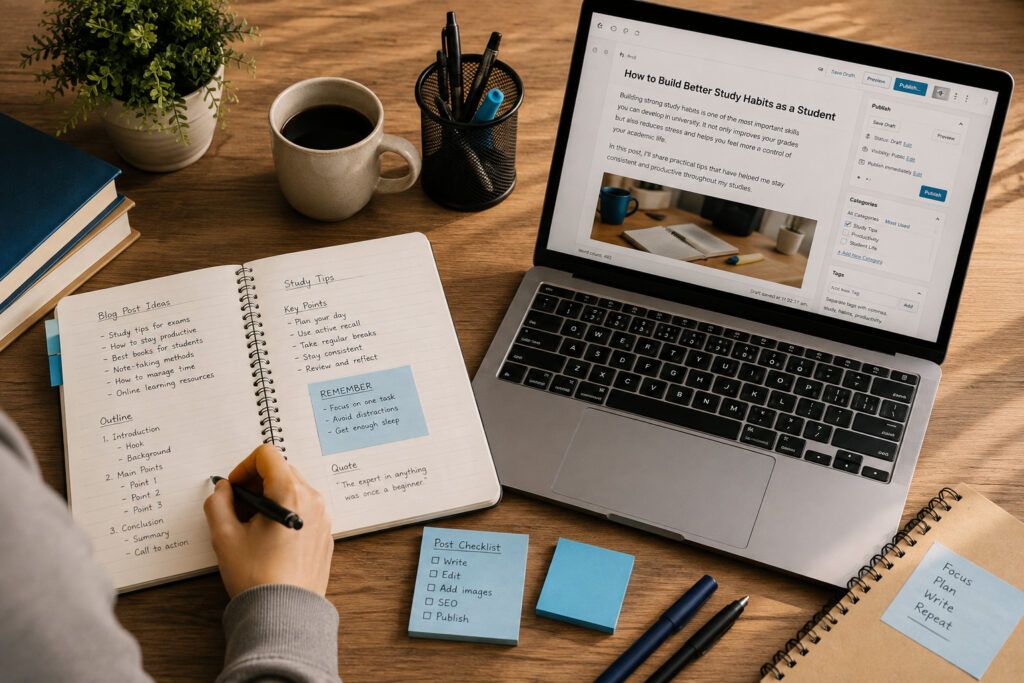
Student blogging means publishing articles tied to your studies, projects, hobbies, or career interests. Classroom essays usually reach one grader. Blog posts can reach anyone searching for the same problem you just solved.
That shift changes how you learn. You stop memorizing only for exams and start learning so you can teach. Explaining a dense topic in plain language forces deeper understanding. A computer science student might write Python tutorials. A biology student might turn lecture notes into clean study guides. A finance student might translate market news into language other students can follow.
You do not need a technical major. Study systems, scholarships, language learning, campus life, creative crafts, and productivity methods all work when the writing is honest and useful.
Why blogging still matters in 2026
AI made drafting faster. It also flooded the web with empty text. Readers and search engines reward voices that show real practice, real examples, and real judgment. A student who publishes original walkthroughs, project notes, and hard-won lessons builds trust that generic AI pages cannot copy easily.
A steady blog also shows qualities that a transcript cannot fully capture. Clear communication. Research habits. Consistency. Initiative. Digital literacy. Problem solving. Those traits become visible when someone opens your site and finds twenty helpful posts instead of one thin About page.
The benefits you will notice first
The payoffs arrive in layers. Some show up in your next essay. Others show up in interviews years later. Here is how they usually stack.
Academic strength
Writing for strangers trains grammar, structure, and clarity faster than writing only for marks. You learn to open with the point, cut fluff, and support claims with sources. Research for articles teaches you to check credibility instead of grabbing the first result. Many students find classroom writing gets easier after a few months of publishing because the muscle is already warm.
Teaching a concept on your blog also reveals gaps. If you cannot explain a theorem or a framework simply, you do not own it yet. That feedback loop improves study quality without another exam.
Career proof
A resume claims skills. A blog shows them. Recruiters can click through tutorials, case notes, and project write-ups. Your public archive becomes a living portfolio that search engines index, so your name starts associating with the topics you cover.
Networking becomes less awkward too. Sharing useful posts in student Discords, LinkedIn circles, or niche forums introduces you through value instead of cold pitches. Mentors and peers who care about the same field often find you that way.
Personal growth
Publishing builds a quieter kind of confidence. You practice stating a view, revising it, and standing behind it. Students who dislike public speaking often find writing is a safer stage for developing voice. A realistic posting schedule also trains planning and follow-through, the same habits that protect you during heavy exam weeks.
Digital skills that transfer
Running a blog teaches web publishing, basic design judgment, search awareness, image handling, and simple analytics. You learn how pages load, why titles matter, and how to keep a site from looking abandoned. Those skills show up in almost every modern job that touches content, product, marketing, or research communication.

Honest tradeoffs before you start
Blogging rewards patience. Search traffic often takes six to twelve months to feel meaningful. A domain and hosting can cost a little money. Screen time can creep if you never set boundaries. Sites need occasional updates and backups.
The upside still outweighs those costs for most students who stick with it. You gain a public portfolio, real skill practice, optional income paths, and a network that grows with your archive. Go in with eyes open. Treat slow early traffic as normal, not failure.
How to launch a student blog that lasts
A durable blog needs a clear direction, a platform you can maintain during exams, and a publishing system that does not rely on daily free time. Work through the steps below in order.
Step 1. Pick a niche you can sustain
Most students do well with one of two tracks.
Academic focus. Document coursework, unpack dense papers, and explain methods from your major. This path attracts peers, teaching assistants, and later recruiters or admissions readers. Examples include Python data structures explained simply, anatomy study notes, or readings on international markets made readable.
Hobby and how-to focus. Publish tutorials, comparisons, and troubleshooting guides. This path often grows traffic faster for consumer topics. Examples include budget laptop tests, design tool walkthroughs, or affordable study-abroad checklists.
Validate the idea before you buy anything. Search your topic and see whether people ask real questions. Skim forums and Reddit threads. If you can list fifteen article ideas without straining, the niche is wide enough for a first year.
Step 2. Choose Blogger or WordPress
Match the platform to your budget and patience for setup.
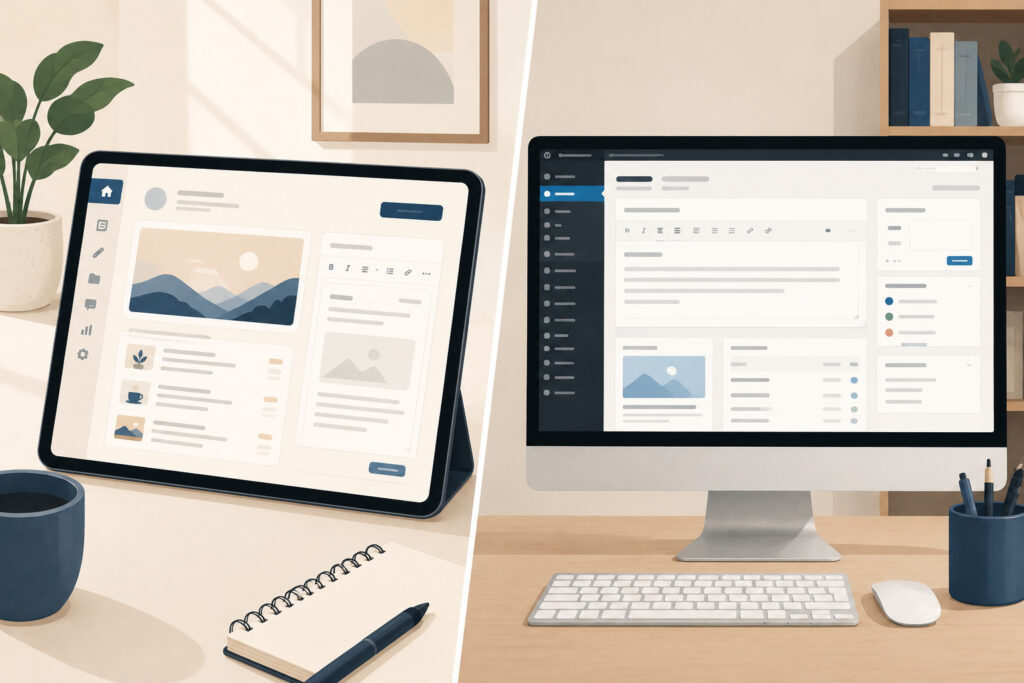
Google Blogger with a custom domain keeps hosting free while you pay about ten to fifteen dollars a year for a .com name. It is stable and simple. Design freedom and advanced SEO plugins are more limited. COMPROMATH has a full walkthrough if you want to start blogging on Blogger.
Self-hosted WordPress usually costs a few dollars a month for quality hosting, often with a free domain in year one. You get full control, SEO plugins, and theme flexibility. It asks for a bit more learning. Compare hosts carefully using COMPROMATH’s guide to WordPress hosting for bloggers.
If you want the lowest friction while you learn publishing habits, start on Blogger. If you already know you want plugins, memberships, or long-term ownership of every file, start on WordPress. You can migrate later when the archive is worth moving. For that journey, see COMPROMATH’s guide on how to migrate from Blogger to WordPress.
Step 3. Get a professional domain
A clean domain looks more serious than a free subdomain. Keep it short, easy to spell, and close to your name or niche. Avoid trendy spellings you will hate saying out loud. Point the domain at Blogger or your WordPress host, turn on HTTPS, and leave the technical rabbit holes for later.
Step 4. Plan your first fifteen posts
Blank calendars kill blogs. Before launch day, list fifteen topics that answer specific questions. Mix cornerstone guides with smaller posts. Group related titles into clusters so one strong article can support several related pieces. Example cluster for a CS student might include a pillar guide on beginner Python, then posts on lists, dictionaries, debugging errors, and a mini project.
Set a schedule you can keep during midterms. One solid post each week beats five rushed posts in a burst and then silence. Batch research on one day and drafting on another so exam weeks do not erase momentum.
Step 5. Write posts that solve real problems
Aim for clarity over cleverness. Open with the reader’s problem. Explain the steps or concepts in order. Add examples from your own coursework when you can. Close with what to do next. Long enough to be complete usually means well over a thousand words for guides, but length without usefulness is just padding.
Use short paragraphs, descriptive subheads, and scannable sections. Readers on phones will leave if every idea sits in a wall of text. Quality still beats volume. Ten helpful posts outperform fifty thin ones.
Step 6. Learn basic SEO without obsession
Search is how most blogs grow after the first social spike fades. Put the main phrase in the title and early paragraph when it sounds natural. Use related phrases in subheads. Write unique meta titles and descriptions in your SEO plugin or Blogger settings. Compress images, add alt text, and link related posts together so readers and crawlers can move through your cluster.
Make pages easy to read. Fast loading, mobile-friendly layout, and clear typography matter as much as keyword tricks.
Step 7. Share where your readers already gather
Do not wait for Google alone. Share finished posts in academic Discords, campus groups, LinkedIn, and relevant subreddits. Lead with help. Answer the thread. Link your deeper guide when it truly fits. Empty link drops get ignored and sometimes banned.
Track a few simple numbers after a month. Which posts earn search visits. Which referrers send people. Which titles get ignored. Adjust the next fifteen ideas from that evidence instead of guessing.
Using AI as an assistant, not a ghostwriter
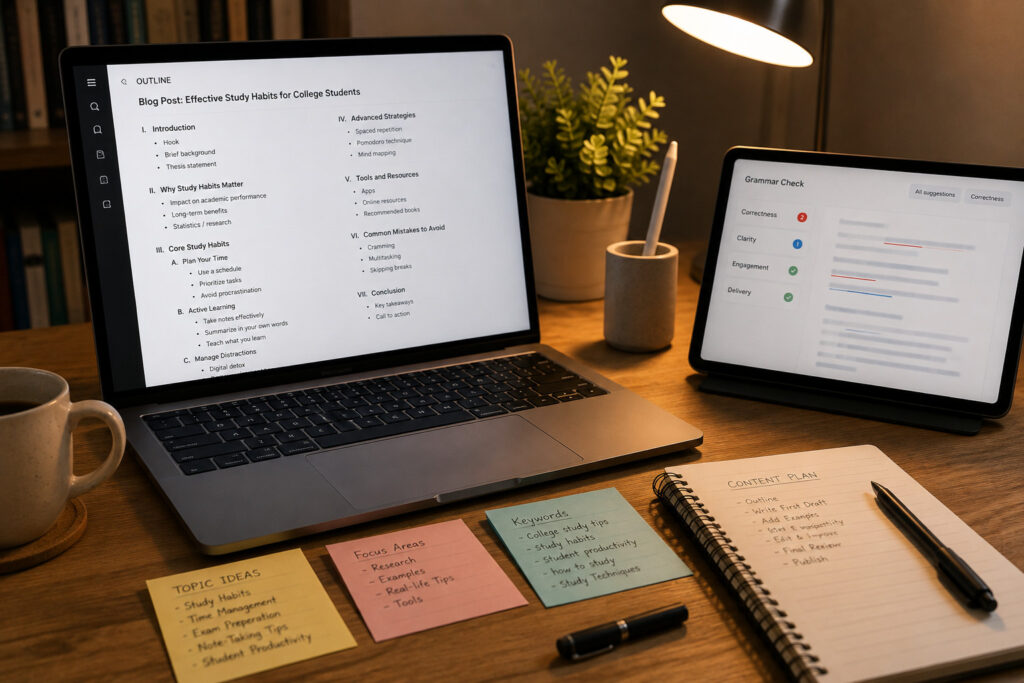
AI can speed student blogging if you keep authorship. Let tools suggest topic lists inside your niche, turn messy notes into outlines, and flag grammar issues. Use research assistants to find angles, then verify claims yourself. Turn a finished post into a LinkedIn summary or short script only after the article is solid.
Popular helpers include ChatGPT or Claude for outlining, Grammarly for polish, Perplexity for source hunting, and Canva for simple graphics. Whatever stack you pick, keep a hard rule. Your examples, screenshots, mistakes, and voice stay yours. Universities and employers care about integrity. Search readers can smell generic filler.
Challenges every student blogger hits
Not enough time. Block three protected hours on a weekend. Research, draft, and schedule ahead so exam weeks do not stop publishing. Batching beats daily heroics.
Empty idea list. Stop hunting for genius topics. Turn lecture notes, lab steps, and reading summaries into structured posts. Document what you are already learning.
Quiet analytics. Early traffic is slow for almost everyone. Answer specific questions on Quora or Reddit and link to your deeper guide. Improve titles. Publish the next post anyway.
Comparison spiral. Established blogs had years of compounding. Measure yourself against last month’s archive, not someone else’s homepage.
Writer’s block. Start with a messy outline from your notes. Write the middle first. Edit later. Momentum returns after the first ugly paragraph.
Technical friction. Keep a simple theme. Update plugins or Blogger settings on a schedule. Back up before experiments. When you outgrow free hosting limits, move carefully rather than improvising on a live domain.
Mistakes that stall student blogs
Choosing a niche so wide that every post feels random. Publishing only short notes that never answer the full question. Ignoring search basics forever. Copying other blogs until your voice disappears. Quitting in month three because results are not viral yet.
Fix those early. Narrow the topic. Prefer helpful depth. Learn enough SEO to be found. Cite and build on others without cloning. Commit to a six-month experiment before you judge the project.
Time habits that keep blogs alive during exams
Use a simple content calendar in Notion, Google Sheets, or paper. Batch similar work so research days stay research days. Set goals you can hit during heavy course loads, even if that means two posts a month in peak season. Schedule posts when your platform allows so publishing does not depend on willpower at midnight.
Successful student bloggers protect sleep and study first. The blog supports your future. It should not sabotage the semester that gets you there.
Turning the blog into a side hustle later
Money usually follows useful traffic, not the other way around. Build the archive first. When visits become steady, layer income carefully.
Display ads pay based on pageviews once you qualify for networks such as Google AdSense and, later, higher-paying partners. Affiliate links work when you recommend tools, books, or courses you actually understand. Digital products like study templates, cheatsheets, or Notion dashboards can sell quietly. Sponsored reviews arrive after you have trust. Freelancing and small courses often grow from the authority the blog creates.
Be realistic about timing. Months one to three are usually setup and early posts with little or no income. Months four to eight may show small affiliate or ad tests if traffic rises. Months nine to eighteen are where diversified income becomes plausible for students who stayed consistent.
Example projections you see online often assume around 25,000 monthly pageviews. At that level, some blogs mix ads, affiliates, and small digital sales into a few hundred dollars a month. Your numbers will differ by niche, country, and offer quality. Treat projections as illustrations, not promises.

A simple checklist to start this week
Choose academic or hobby focus. Draft fifteen titles. Pick Blogger or WordPress. Register a clean domain. Write the first helpful guide from notes you already have. Publish it. Share it where classmates ask questions. Schedule the next writing block on your calendar before motivation fades.
Final thoughts
Blogging will not replace your degree. It will make the learning visible. Each post compounds into a record of curiosity, skill, and follow-through that grades alone cannot show. Start small, stay useful, and give the archive enough months to breathe.
When you are ready for hosting decisions, Blogger setup, or a later move to WordPress, this practical guides are here for the next step. Build the habit first. The platform details get easier once you know what you want to publish.
