
How to Get Paid for AI Training: Legit Companies Hiring in 2026
In 2026, “training AI” no longer means having a PhD in machine learning or building neural networks from scratch. In reality, much of today’s AI progress depends on structured, high-quality human feedback. From rating chatbot answers to validating datasets for advanced models, people across the world are being paid to improve Large Language Models (LLMs) and other AI systems.

This field is commonly known as data annotation, AI evaluation, or RLHF (Reinforcement Learning from Human Feedback). The work ranges from simple tasks like tagging images or labeling text to more advanced responsibilities such as reviewing legal arguments generated by AI, debugging code outputs, or assessing nuanced reasoning.
If you’re analytical, detail-oriented, and comfortable working online, AI training can be a flexible and well-paying opportunity. Below is a curated, practical guide to legitimate companies hiring in 2026 along with realistic earning expectations and how to position yourself for success.
What Does “AI Training” Actually Involve?
Before jumping into company names, it’s important to understand the nature of the work.
AI training roles typically include:
- Comparing two AI-generated responses and choosing the better one
- Writing structured feedback explaining why one answer is stronger
- Annotating text, audio, or images
- Fact-checking AI outputs
- Rating helpfulness, safety, or reasoning quality
- Providing expert review in specialized fields (law, medicine, coding, finance)
At the higher end, this becomes less “click-work” and more cognitive evaluation. Platforms increasingly value reasoning skills over speed.
Legit Companies Hiring for AI Training in 2026
Below are established platforms grouped by category so you can understand how they operate.
1. Direct Platforms (Task-Based Work)
These companies maintain their own contributor pools and typically offer flexible, project-based contracts.
DataAnnotation.tech
A well-known platform focused heavily on reasoning-intensive tasks. Workers often evaluate AI-generated answers, improve prompts, and provide structured critique. Pay is competitive, especially for technical contributors.
Outlier
Specializes in reviewing AI-generated responses. Many users report relatively smooth onboarding and steady short-term projects. Tasks often involve grading and ranking AI outputs.
Mindrift
Primarily focuses on LLM evaluation and structured written feedback. Reported rates range from $15 to $60 per hour, depending on the complexity and expertise required.
Prolific
Originally built for academic research studies, Prolific now includes AI training tasks. Domain experts especially in technical or academic areas can earn $25–$50 per hour.
Appen (CrowdGen)
One of the longest-running names in data labeling. Projects include linguistic tasks, search evaluation, and speech annotation. Stability varies by region and project availability.
Alignerr
Focuses on cognitive labeling and ethical AI alignment tasks. Ideal for contributors comfortable with complex reasoning and safety-related evaluation.
2. Enterprise & Agency Platforms
These companies often manage larger teams and structured projects. Work may be longer-term and more formal.
TELUS International AI
A global AI services provider that absorbed many former Lionbridge AI programs. Known for search evaluation, multilingual data, and region-based hiring.
Invisible Technologies
Offers structured, team-based roles for data review, model validation, and AI support. Often more operational and workflow-driven than task marketplaces.
Scale AI
Enterprise-focused and heavily involved in large-scale data validation. Some contributor roles are project-based, while others are structured contract positions.
OneForma
Widely used for multilingual tasks such as translation, transcription, and linguistic evaluation. Particularly useful for bilingual or multilingual contributors.
3. Aggregators & Marketplaces
These platforms don’t directly train AI but connect you to opportunities.
OpenTrain AI
Aggregates AI training jobs from over 20 platforms into a searchable feed. Useful for discovering new opportunities without manually checking multiple sites.
Upwork
A major freelance marketplace with thousands of listings for “AI Data Annotator,” “Prompt Engineer,” and “AI Evaluator.” Competition can be high, but rates are negotiable.
Earnings Expectations in 2026
Compensation varies widely depending on skill level, specialization, and geographic region.
General Tasks
Basic labeling, comparison, and annotation typically pay:
$15–$25 per hour
These roles require focus and consistency but not deep subject-matter expertise.
Specialized Domain Experts
If you have professional experience in:
- Law
- Medicine
- Software engineering
- Finance
- Academic research
You can earn:
$50–$150+ per hour
High-level evaluation tasks require nuanced judgment and clear written reasoning.
Average Salary
For full-time structured roles in the U.S., the average annual salary for an AI Trainer is approximately:
$64,000–$70,000 per year
Freelancers may earn more or less depending on workload consistency.
How to Get Started (Strategic Approach)
Getting accepted is not random. Treat it like a competitive technical role.
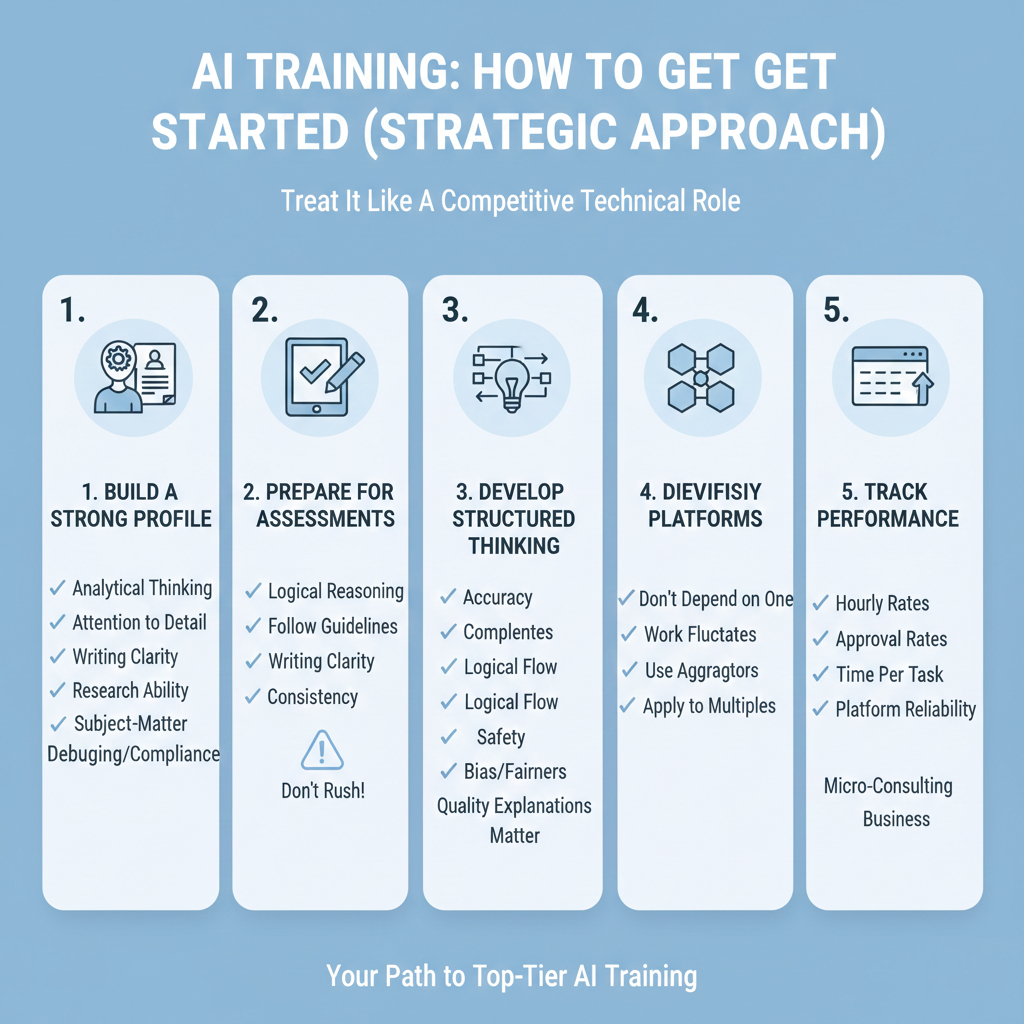
1. Build a Strong Profile
Your resume should emphasize:
- Analytical thinking
- Attention to detail
- Writing clarity
- Research ability
- Subject-matter expertise (if any)
If you have coding experience, highlight debugging and documentation skills. If you’re in law or healthcare, emphasize critical evaluation and compliance awareness.
2. Prepare for Assessments
Most platforms require entry tests. These often evaluate:
- Logical reasoning
- Ability to follow detailed guidelines
- Writing clarity
- Consistency
Take these seriously. Many applicants fail because they rush.
3. Develop Structured Thinking
AI training rewards clarity. When explaining why one response is better, use structured reasoning:
- Accuracy
- Completeness
- Logical flow
- Safety considerations
- Bias and fairness
Your explanation quality directly impacts your acceptance and long-term opportunities.
4. Diversify Platforms
Do not depend on a single source of income. Work availability fluctuates. Use aggregators and apply to multiple platforms.
5. Track Performance
Maintain your own spreadsheet of:
- Hourly rates
- Approval rates
- Time per task
- Platform reliability
Treat it like a micro-consulting business, not a side gig.
You May Like:
- How to Get Paid to Test Apps and Games: A Practical Guide for Beginners
- How to Get Paid to Test Products at Home
- Get Paid to Watch Ads: Real Ways to Earn While You Binge
Final Thoughts
AI systems in 2026 are more powerful than ever but they still depend heavily on human intelligence. Behind every polished chatbot response or advanced reasoning engine is a network of people evaluating, correcting, and refining outputs.
The opportunity is real. The pay can be meaningful. But success requires discipline, analytical clarity, and professionalism.
If you approach AI training casually, you’ll earn small amounts sporadically. If you approach it strategically building expertise, passing assessments seriously, and targeting higher-value domains it can become a strong remote income stream or even a career path.
# Written by Elliyas Ahmed