
How to Get Paid to Write Reviews in 2026: The Complete Beginner’s Roadmap
In 2026, getting paid to write reviews is absolutely real. But it no longer looks like it did five or ten years ago.
The landscape has shifted.
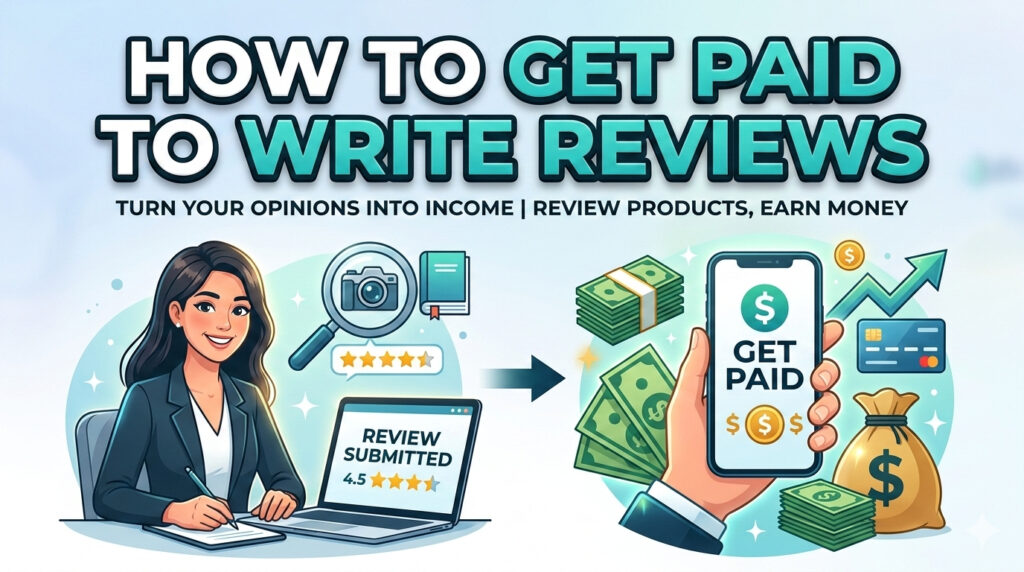
What used to be simple text-based feedback is now part of a larger creator economy. Brands want authentic voices, short-form video demonstrations, real-world testing, and audience trust. Written reviews still matter, especially in software and publishing, but video-based UGC (User-Generated Content) has dramatically increased earning potential.
If you are wondering whether this is a quick side hustle or a serious income stream, the answer is: it can be either. It depends on your strategy.
This guide breaks down everything step by step, from beginner micro-tasks to scalable content businesses.
The Three Paths in 2026
Before you start, you need to decide which path fits you:
- Micro-Task Reviewer – Small, fast payments for simple reviews.
- Professional Reviewer – Higher-paid, analytical critiques (software, books, tech).
- Content Creator – Affiliate marketing, sponsorships, and UGC video income.
Each path has different income potential, effort requirements, and scalability.
1. Direct Platforms (Best for Beginners)
If you want quick, low-commitment earnings, direct review platforms are the easiest entry point.
These sites typically pay a flat fee, points, or gift cards.
Software & Business Reviews (High-Paying Text Reviews)
These platforms pay well because business software companies value professional feedback.
- G2
Pays up to $25 in gift cards per approved software review. - Capterra
Typically pays around $10 per verified review. - Gartner Peer Insights
Offers up to $25 for verified IT and software reviews. - Software Judge
Rewards users for sharing opinions, sometimes up to $50 per review.
Important:
Most require a verified LinkedIn profile to confirm you actually use the software professionally.
If you work in tech, SaaS, HR systems, marketing tools, or cybersecurity, this can be surprisingly lucrative.
User Testing Platforms (Video-Based Reviews)
Instead of writing text, you record your screen and speak your thoughts aloud while using apps or websites.
- UserTesting
Pays around $10 for a 20-minute test. - Trymata
Offers $5–$30 depending on complexity.
You typically:
- Navigate a website
- Complete tasks
- Verbalize your experience
- Submit recorded feedback
This is closer to usability research than traditional reviewing.
Learn More: How to Get Paid to Test Products at Home
Niche Interest Platforms
These are fun but usually lower-paying.
- SliceThePie
Pays small amounts per review for music, ads, and fashion. - Online Book Club
Pays $5–$60 per book review after an initial unpaid trial. - PlaylistPush
Can pay up to $15 per song review if you manage a Spotify playlist with a strong following.
Survey & Reward Platforms
These are not pure “review writing” platforms but often include product feedback tasks.
- Swagbucks
- InboxDollars
- Harris Poll Online
- CrowdTap
Compensation comes as points, gift cards, or small cash payouts.
Good for beginners. Not scalable.
2. Professional Book Reviewing (Higher Skill, Higher Credibility)
If you have strong analytical writing skills, professional publications offer better rates.
- Kirkus Media
Pays roughly $50 for 350-word reviews under its Indie program. - The U.S. Review of Books
Employs freelance reviewers. - Publishers Weekly
Offers honorariums for professional-grade reviews. - Reedsy Discovery
Monetizes reviews through reader tipping ($1–$5 per tip).
This path requires:
- Strong writing skills
- Analytical depth
- Editorial professionalism
But it builds credibility fast.
3. High-Growth & Scalable Options (The Real Money)
If you want to move beyond small payouts, you need leverage.
That means building your own platform.
Amazon-Based Income Models
- Amazon Vine
Invite-only program for top reviewers to receive free products. - Amazon Influencer Program
Build a storefront and post shoppable videos. - Amazon Associates
Earn 1–5% commission on product purchases through your links.
Learn more: How to Get Paid to Test Products on Amazon: Step-by-Step Guide for Beginners
In 2026, short demo videos embedded on product pages can earn On-Site Commissions even if customers do not click your link.
That is a major shift from the old affiliate-only model.
UGC Marketplaces (The 2026 Power Move)
Brands now pay for authentic short-form video.
- Billo
- Insense
Typical pay: $50–$300 per video.
Brands license your video for:
- Amazon listings
- TikTok ads
- Instagram campaigns
This is where earning potential multiplies.
4. Freelance Writing Services
Instead of working on platforms, you can sell your expertise directly.
Use marketplaces like:
- Upwork
- Fiverr
Create gigs like:
- “Professional Amazon Product Review Writing”
- “In-Depth SaaS Software Review”
- “Technical Gadget Review with SEO Optimization”
You can also pitch directly to:
- Local small businesses
- Ecommerce startups
- New Amazon sellers
Direct outreach often pays better than platform tasks.
Step-by-Step Beginner’s Guide (2026 Perspective)
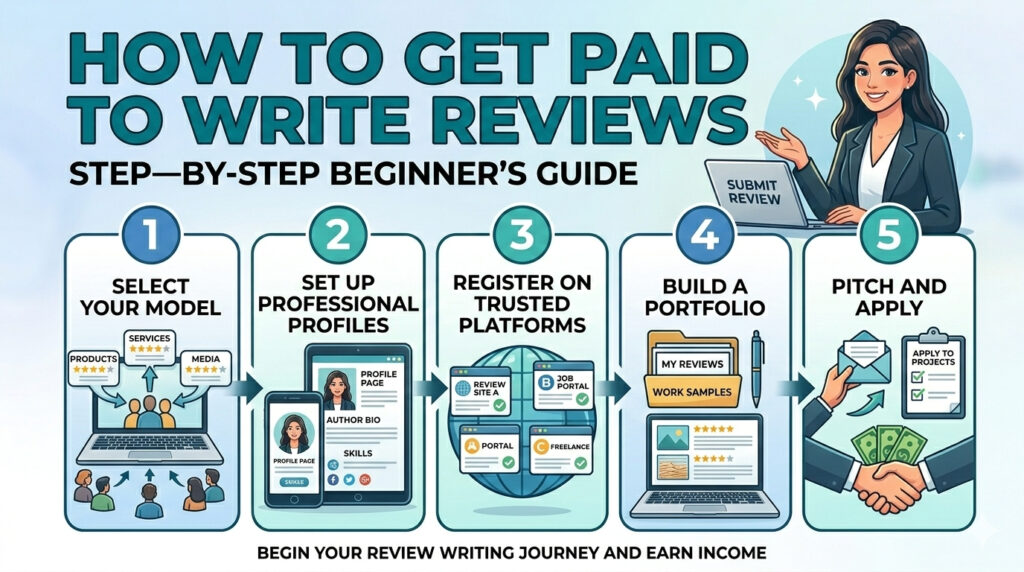
Step 1: Select Your Model
Choose:
- Micro-tasker
- Professional reviewer
- Content creator
Trying to do all three at once leads to burnout.
Step 2: Set Up Professional Profiles
- Create a strong LinkedIn profile.
- Use a professional photo.
- Add niche keywords (e.g., SaaS, HR tools, home gardening).
Software platforms verify identities.
Step 3: Register on Trusted Platforms
Start with:
- G2
- UserTesting
- Trymata
- Online Book Club
Avoid any site that:
- Charges an activation fee
- Requires a 5-star review for payment
- Promises guaranteed income
Step 4: Build a Portfolio
Write 3–5 strong sample reviews of products you own.
Host them on:
- A blog
- Medium
- A simple website
Structure them clearly:
- Introduction
- Key Features
- Pros
- Cons
- Final Verdict
This becomes your proof of quality.
Step 5: Pitch and Apply
Use job boards like:
- ProBlogger
- Freelance Writing Jobs
Reach out to brands with:
- A short intro
- Sample work
- Clear value proposition
Pros and Cons
Pros
Low barrier to entry
No degree required.
Free products
Often you keep what you review.
Flexible schedule
Work anytime, anywhere.
Skill growth
You improve writing, marketing, and content creation skills.
Cons
Inconsistent income
Early-stage earnings are small.
High competition
Popular platforms have long waiting lists.
Scam risks
Many fake “pay-to-review” schemes exist.
Compliance requirements
You must disclose sponsorships clearly.
The Reality Check
Yes, getting paid to write reviews is real.
No, it is not a get-rich-quick scheme.
Legitimate platforms have strict vetting processes. If a company asks you to:
- Pay upfront
- Leave only 5-star reviews
- Buy something first and promise reimbursement
It likely violates platform rules and may result in account bans or financial loss.
Critical 2026 Tips
1. Prioritize Video
Brands increasingly prefer:
- TikTok demos
- Instagram Reels
- Short Amazon product videos
Learning basic video editing can triple your earning potential.
2. Specialize in a Niche
Instead of reviewing “everything,” focus on:
- SaaS for HR
- Home garden tools
- Fitness recovery tech
- Budget kitchen appliances
Specialization builds authority and allows higher rates.
3. Disclose Everything
FTC guidelines require clear disclosure for:
- Sponsored content
- Free products
- Affiliate links
Transparency protects your credibility.
4. Use a Dedicated Email
Create a separate email for:
- Review platforms
- Brand outreach
- UGC applications
This keeps your main inbox clean and organized.
Final Thoughts
In 2026, getting paid to write reviews means adapting to a hybrid model:
- Written critiques
- Video demonstrations
- Affiliate monetization
- Sponsored UGC
If you want quick cash, start with micro-task platforms.
If you want long-term growth, build a niche platform and treat this like a business.
The biggest shift is this:
Reviewing is no longer just feedback.
It is content creation.
And in 2026, creators who combine authenticity, specialization, and compliance are the ones who win.
# Written by Elliyas Ahmed






Does someone have experience, which of this platforms are the best?