If you were in school during the late 2000s, you may remember a strange warning from a teacher, computer lab assistant, or IT coordinator.
“Whatever you do, don’t turn on your computer on this date.”
It sounded dramatic. Almost supernatural. Like something out of a digital ghost story.
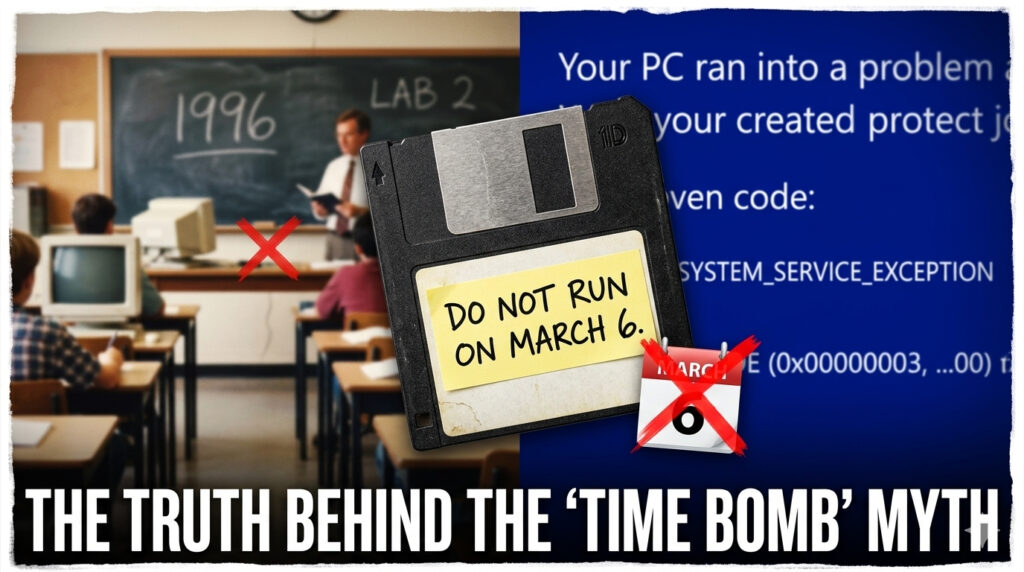
The rumor was simple. A mysterious computer virus existed that slept quietly inside your system. Then, on a specific date, it would suddenly wake up and destroy your files, wipe your hard drive, or permanently damage your computer.
Students whispered about it in computer labs. Teachers repeated the warning just in case it was true.
But was there ever a real “time bomb” virus waiting inside our computers? Or was it simply a myth that spread through schools and offices?
The truth lies somewhere in between. While many of the warnings became exaggerated over time, they were inspired by several very real viruses that once terrified the computing world.
Let’s explore the origins of the date-activated virus legend and the real malware that fueled the fear.
What Is a “Time Bomb” Virus?
In cybersecurity, the idea behind a time bomb is actually real.
Security professionals refer to it as a logic bomb.
A logic bomb is a piece of malicious code secretly inserted into a system. It remains inactive until a specific condition is met. Once the condition occurs, the code executes its harmful action.
That condition can be many things, such as.
- A specific date
- A particular file being deleted
- A user account being removed
- A certain number of program executions
When the trigger is a specific date or time, it is commonly called a time bomb.
During the early years of personal computing, especially throughout the 1980s and 1990s, programmers experimenting with malware often used the system clock as the trigger. Computers were simpler, operating systems had fewer protections, and antivirus tools were still evolving.
As a result, some viruses really did activate on specific dates.
And a few of them became legendary.
The Real Viruses That Fueled the Legend
The warnings many students heard around 2009 or 2010 were not completely invented. They were echoes of earlier computer scares that had spread through news media and IT communities.
Several infamous viruses helped build the mythology of the “time bomb virus.”
1. The Jerusalem Virus. The Friday the 13th Virus
One of the earliest examples appeared in 1987.
Known as the Jerusalem virus, it was discovered at the Hebrew University of Jerusalem and quickly spread to computers across the world. At the time, most PCs were running DOS and had very limited protection against malicious software.
The virus infected executable files. Each time an infected program was run, the virus copied itself to other programs on the system.
What made the Jerusalem virus particularly frightening was its trigger condition.
Every Friday the 13th, the virus activated a destructive routine. On that day, any program you attempted to run would be immediately deleted from the system.
Imagine trying to open a program and watching it disappear instantly.
Because Friday the 13th appears at least once a year and sometimes multiple times, many users experienced the effect directly. The virus became widely known and helped create a cultural fear surrounding that specific date in the computing world.
2. The Michelangelo Virus. The March 6 Panic
If the Jerusalem virus started the legend, the Michelangelo virus turned it into a global media event.
Discovered in 1991, the virus was designed to activate on March 6, the birthday of the Renaissance artist Michelangelo.
The virus infected the boot sector of hard drives and floppy disks. Boot sector viruses were particularly dangerous because they executed before the operating system even loaded.
When March 6 arrived, the virus attempted to overwrite the first 100 sectors of the hard drive with meaningless data.
Those sectors contained essential information needed to start the computer. Once destroyed, the machine would no longer boot.
As March 6, 1992 approached, news organizations around the world began reporting on the potential threat. Headlines warned that millions of computers could be wiped out overnight.
Businesses rushed to install antivirus software. IT departments worked late nights scanning machines.
The predicted catastrophe never fully materialized. While thousands of computers were affected, the number was far lower than the millions originally feared.
Still, the panic left a lasting impact. For many people, it was the first time they realized that a computer virus could activate on a specific date.
3. The CIH Virus. The Chernobyl Virus
Perhaps the most destructive date-triggered virus arrived later in the 1990s.
Known as the CIH virus, and often referred to as the Chernobyl virus, it first appeared in 1998. It was written by a Taiwanese student and spread primarily through infected software downloads and pirated programs.
Its trigger date was April 26, the anniversary of the 1986 Chernobyl nuclear disaster.
CIH was far more sophisticated and dangerous than earlier viruses.
On its activation date, it attempted two devastating actions.
- It overwrote large portions of the computer’s hard drive.
- It attempted to overwrite the system’s BIOS chip.
The BIOS is the fundamental firmware that tells a computer how to start up. If the BIOS is corrupted, the machine cannot even begin the boot process.
Unlike normal viruses that only destroy files, CIH could effectively brick the hardware itself.
In the late 1990s, many motherboards did not have protection against BIOS rewriting. Thousands of computers were permanently damaged and required physical repairs or motherboard replacement.
For users who experienced it, the virus was not just inconvenient. It was expensive.
Stories like this helped cement the belief that certain calendar dates could be dangerous for computers.
How the “Shut Down Your Computer” Advice Became a Myth
By the time the late 2000s arrived, the computing landscape had changed dramatically.
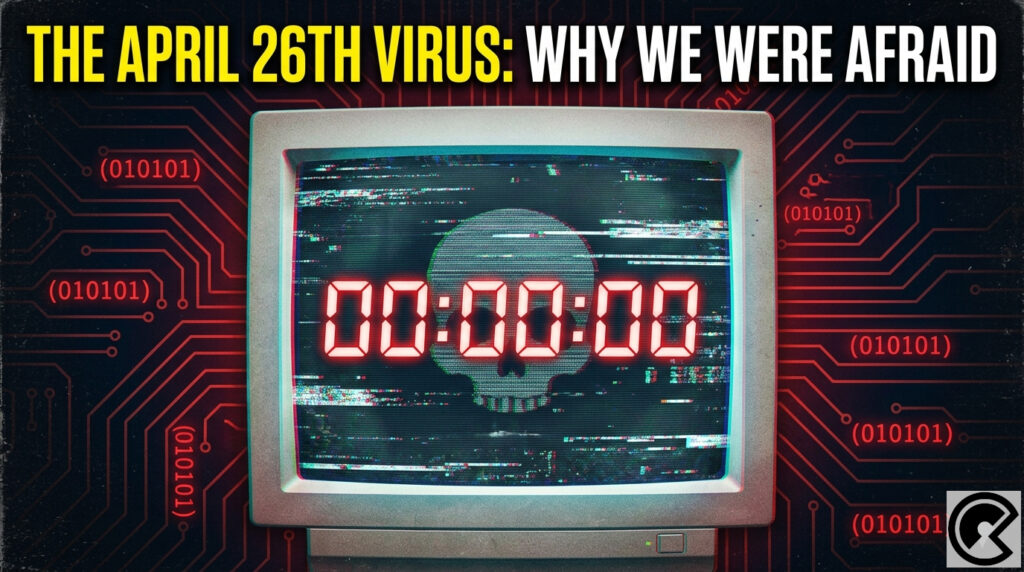
Operating systems were more secure, antivirus programs had matured, and internet security awareness had grown. Yet the warnings about “dangerous dates” continued circulating in classrooms and offices.
Over time, the original stories evolved into a kind of technological urban legend.
Several factors explain why.
Antivirus Software Became Much Smarter
Early antivirus tools relied heavily on manually identifying threats. By the 2000s, they used sophisticated signature-based detection and behavioral analysis.
Security researchers could analyze a virus months before its trigger date and distribute detection updates worldwide. Most threats were neutralized long before they had a chance to activate.
Hackers Changed Their Motivation
In the early days of computing, many virus creators were motivated by curiosity, experimentation, or the desire to show off their technical skills.
Modern cybercrime is very different.
Today, most attackers want to make money, not destroy computers. A destroyed system is useless to them. They cannot steal data from it, mine cryptocurrency on it, or show advertisements through it.
As a result, modern malware tends to remain hidden and persistent rather than destructive.
The Y2K Effect
Another reason the myth survived was the collective memory of the Y2K bug.
In the late 1990s, experts warned that computers might fail when the calendar rolled over from 1999 to 2000 because many systems stored years using only two digits.
Governments and companies spent billions preparing for potential failures.
Although most systems were fixed before the date arrived, the cultural memory remained. People began associating computers with mysterious date-related failures.
Over time, the stories blended together. Many people believed that viruses, software bugs, and system glitches were all part of the same phenomenon.
Cybersecurity Tips for the Modern Internet
While you no longer need to fear turning on your computer on a particular day, cybersecurity threats are still very real.
They simply look different today.
Here are some practical steps to stay protected.
Enable Automatic Updates
Most modern attacks exploit newly discovered vulnerabilities in software. These are often called zero-day vulnerabilities because developers have had zero days to fix them before attackers start exploiting them.
Keeping your operating system, browser, and applications updated is one of the most effective defenses.
Use Multi-Factor Authentication
Attackers increasingly target user accounts instead of computers themselves. Email accounts, cloud storage, and social media profiles are common entry points.
Multi-factor authentication (MFA) adds an additional verification step, making it much harder for attackers to gain access even if they steal your password.
Use Security Software With Behavioral Detection
Modern security tools do more than scan for known virus signatures. They also use heuristic analysis and behavioral monitoring to detect suspicious activity.
This allows them to identify new threats that have never been seen before.
Conclusion
The “time bomb virus” is one of the most fascinating legends from the early days of computing.
It reminds us of a period when hacking was often driven by experimentation and mischief rather than organized cybercrime. Viruses were sometimes designed as digital pranks, graffiti, or demonstrations of technical skill.
While date-activated malware did exist, the widespread fear that computers could suddenly self-destruct on a particular day has largely faded.
Today’s threats are quieter, more sophisticated, and often financially motivated.
The lesson remains the same, however.
Good security is not about worrying about a specific date. It is about staying prepared every day.
Keeping software updated, using strong authentication, and practicing safe browsing habits will protect you far more effectively than turning off your computer for a single day of the year.
And unlike the old ghost stories of the computer lab, that advice is grounded firmly in reality.
